Cream battery chargers sit quietly behind bench or on the bread station, doing unglamorous work that makes desserts and beverages sing. They are simple steel cylinders loaded with laughing gas, yet reports, half-truths, and web mythology cling to them. I have educated bar groups and pastry cooks who speak highly of them, and I have also audited kitchen areas where abuse transformed a trustworthy tool into a liability. Allow's remove the noise and talk clearly concerning N2O cream chargers, exactly how they work, where the myths originate from, and what matters for any individual that uses them in a specialist or home setting.
What a lotion charger in fact does
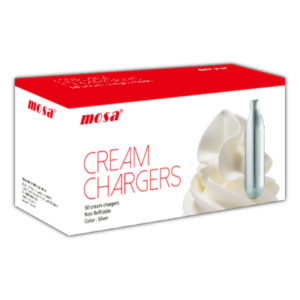
A Laughing gas lotion charger is a covered cartridge, generally 8 grams of N2O, that strings into a compatible dispenser head. When punctured, the gas dissolves right into the fat and water in lotion under stress, then creates tiny bubbles as the combination exits the nozzle. The fat maintains those bubbles, which is why dairy products cream with adequate butterfat yields quantity and structure. The outcome: clean, regular whipped lotion without blending for mins, with better shelf security than hand-whipped foam.
The pressure inside a new battery charger commonly kicks back 50 to 60 bar at area temperature. The dispenser, not the cartridge, controls exactly how that energy is launched. Quality dispensers have pressure-rated bodies, one-way valves, gaskets, and nozzles designed for food use. When you shoot, you are not releasing "raw" N2O into the air. You are giving aerated lotion with nitrous oxide microbubbles that swiftly diffuse.
That is the mechanism. No magic, no enigma. Just physics and fat.
Myth 1: "Cream chargers are all the same, so the most affordable is fine"
I have run side-by-side tests on twenty brand names of N2O cream chargers. Distinctions show up quickly: penetrate seal thickness, inner oil deposit, gas purity portion, and consistency of fill. Less expensive cartridges occasionally have trace impurities or lubricating substances that can impart off-flavors. They might likewise have irregular gas weights, which appears as weak foam or splutter.
Two quality markers stand out. Initially, accreditation and set traceability. Trusted producers publish gas purity data, typically 99.5 percent or higher. Second, clean internals. If you have actually ever bled a battery charger and caught a sharp metallic whiff, you recognize the issue. For bread work, a pale taint suffices to destroy a mousse. For coffee and alcoholic drinks, a metallic edge in the crema or foam sticks around on the palate. Conserving a few cents per cartridge does not pencil out if you get rid of a quart of vanilla cream.
Across a typical coffee shop volume, stepping up from bargain chargers to mid-tier includes a couple of dollars a week and gets rid of a lot of frustrations. If taste issues, purchase clean, constant whipped cream chargers.
Myth 2: "Nitrous oxide makes the lotion wonderful"
N2O is flavor-neutral at cooking concentrations. It is not sugar and does not taste wonderful. What it does is rise viewed sweetness by altering how volatile aromas raise from the foam and how bubbles strike the tongue. A well-aerated cream presents more surface, so vanilla or maple notes feel brighter. Individuals merge that lift with sweetness.
I evaluated three batches of cream at a bar training: one hand-whipped, one in a dispenser with N2O, and one in a dispenser with CO2. The N2O batch reviewed the very same on a refractometer as the others, yet cups consistently called it "sweeter." The CO2 version, on the various other hand, tasted slightly acidic, which muddied sweetness. Laughing gas's neutrality is the factor. It protects your taste balance.
Myth 3: "carbon dioxide functions just as well in a cream dispenser"
You can require CO2 right into lotion, yet you will certainly not like the outcome. Carbon dioxide liquifies quicker in water, forming carbonic acid. Cream transforms tangy and can curdle earlier. Foam framework deteriorates, leaving wet touches. Nitrous oxide is chosen due to the fact that it dissolves completely to give development without substantially acidifying the mix, and it maintains fat-based foams much better. If you want a sparkling foam for a full-flavored dish, that is a various technique, typically with a stabilizer like jelly or methylcellulose and a siphon rated for carbon dioxide. For whipped lotion, use N2O cream chargers. Period.
Myth 4: "Billed cream keeps for life in the refrigerator"
I have actually seen bar refrigerators with week-old containers of whipped cream. That is not best technique. In a clean, food-safe dispenser, effectively stressed cream sweetened with sugar, you might get 3 days of functional appearance, in some cases 4, if you keep it listed below 4 ° C and do not cross-contaminate. Heavy cream with at least 30 percent fat lasts longer than light lotion. Sugar slightly extends life as a result of osmotic pressure, and some stabilizers, such as a pinch of jelly or 0.1 to 0.2 percent xanthan gum tissue, can preserve framework. However oxygen sneaks in when you dispense, and little temperature swings accelerate breakdown.
Food safety and security matters more than foam stability. If your kitchen cycles with lotion daily, a one to 2 day window is much more realistic and much safer. I have declined dispensers at events because they smelled faintly tacky, which indicates microbial development. Mark the date on the container, cleanup and tidy every 24 to two days, and do not cover up yesterday's set with today's mix.
Myth 5: "Even more battery chargers suggest better foam"
Overcharging prevails. A conventional 0.5 litre siphon needs one 8-gram N2O battery charger for gently whipped cream and usually a second charger to attain solid heights, depending on fat web content and temperature level. Beyond that, returns lessen and risks climb. Way too much gas produces coarse bubbles, spewing, and weeping. The foam looks inflated, then breaks down on the plate.
Temperature is the hidden bar. Cool the dispenser body, the lotion, and the nozzle. Lotion near 2 to 4 ° C liquifies gas extra uniformly and extrudes a tighter, silkier foam. I once watched a brand-new barback melt via three chargers trying to deal with cozy cream in a warm kitchen during brunch solution. We placed the filled siphon in an ice bath for 10 minutes. Another shake, ideal rosettes.
If a recipe is not holding, inspect fat percentage, temperature, and sugar content prior to including gas. Every extra charger costs cash and can break down texture.
Myth 6: "Cream chargers are a single-use environmental catastrophe"
There is an environmental footprint, no question. Steel cartridges, also little ones, build up. The photo is more https://cashmjgo482.cavandoragh.org/how-to-store-and-maintain-your-cream-chargers-for-durability-and-security nuanced though. Chargers are steel, not mixed plastic, and are widely recyclable if handled properly. The issue is contamination and residual gas. You ought to totally release empty battery chargers, then gather them in a specialized container for steel recycling. Several community programs approve them. Some vendors run take-back systems, especially for cafes.
Lifecycle comparisons obtain slippery. If you retire your dispenser and hand-whip every set, you remove the cartridge however frequently waste more cream, particularly in a busy establishing where cream sits, warms, then breaks. A siphon allows you bill percentages on demand, which reduces oxidation and waste. In my experience, the waste decrease can offset a purposeful portion of the battery charger footprint, specifically in high-volume service.
If sustainability is a priority, I recommend three actions. First, get reliable brand names that certify reused steel web content and clean manufacturing. Second, train team to release and recycle properly. Third, song set dimensions to your top periods so you reduce remaining lotion. A sincere internal audit usually reveals careless methods that cost greater than the battery chargers themselves.
Myth 7: "Any kind of lotion functions"
Fat is structure. Cream below 30 percent fat struggles to hold bubbles and drains pipes rapid onto home plate. Dual cream, whipping cream, or manufacturing lotion in the 36 to 40 percent variety generates thick, pipeable tops. For lighter cappuccino toppers or Irish coffee, 30 to 34 percent functions if you add sugar and cool completely. Ultra-high-temperature (UHT) cream behaves in a different way. It is much more stable during storage, however can produce a somewhat different mouthfeel. Some bread chefs choose UHT for uniformity, others advocate sterilized for a cleaner dairy flavor. Both can work.
I tune dishes such as this: for a dessert finish, 36 percent cream, 8 to 10 percent sugar by weight, a pinch of salt, and vanilla. I flower gelatin only for warm spaces or lengthy occasions. For coffee service, I cut sugar to 4 to 6 percent, occasionally include a touch of crème fraîche for tang, and cost lightly so the foam drifts but puts thin. Your climate, holding time, and service style dictate the tweaks.
Myth 8: "N2O in whipped lotion threatens to inhale from a treat"
When you consume whipped lotion, you ingest minute amounts of laughing gas dispersed in fat and fluid. It diffuses swiftly from the foam, and you breathe out the majority of it. In cooking usage, it is not intoxication. The worries circulating online conflate food solution with calculated inhalation. Entertainment misuse is a various conversation with real threats: hypoxia, frostbite burns, and vitamin B12 exhaustion with persistent direct exposure. None of that changes the security profile of making use of N2O cream chargers as intended in a kitchen.

What kitchens have to handle is taking care of and storage. Pressurized cartridges ought to be kept one's cool and completely dry. Do not leave them in a warm lorry or near ovens. When you release a charger, the gas increases and chills quickly. That is why frost types on the dispenser head. Give your hands a second to heat the nozzle before the next pull to prevent cold burns.
Myth 9: "Blowing up dispensers are common"
I have actually seen broken dispensers, but in every situation there was a hidden concern: utilizing CO2 bottles not rated for the device, cross-threading, falling short gaskets, or a duplicate head that was never ever pressure examined. Quality dispensers are crafted to withstand the stress of standard N2O cream chargers, with safety and security margins. They stop working by leaking as opposed to bursting. Catastrophic failings make headlines since they are frightening, not because they are statistically common.
Routine inspection is the solution. Examine the gasket for fractures, change worn O-rings, and guarantee the piercing pin is directly. If the head threads feel abrasive, tidy and oil with a food-safe silicone. Retire dispensers with dinged up bodies. The price of a brand-new siphon is trivial compared to a team injury.
Myth 10: "You can make use of a cream dispenser for anything foamy"
A lotion siphon is a terrific tool, but it has restrictions. It stands out at fat-stabilized foams and prep work with dissolved gases, like quick mixtures. It fights with particle-heavy combinations, fibrous purees, and acidic fluids that curdle dairy. If you attempt to foam mango puree, pulp blocks the nozzle and the structure falls down without a stabilizer. The common workaround is to stress with a great chinois or Superbag, in some cases twice, and add a stabilizer, such as 0.3 percent gelatin or 0.2 percent xanthan periodontal. That is not the like whipping cream.
If you desire nitrogen microfoam for alcoholic drinks, you may be thinking of a nitrogen-charged keg system or a nitro pressurizer. N2O cream chargers are not a drop-in substitute for every foam method. Utilize the right gas and the best equipment.
Myth 11: "Whipped lotion from a dispenser tastes man-made"
This myth has legs because commercial aerosol container of whipped covering typically have stabilizers, emulsifiers, and occasionally non-dairy fats. A professional dispenser filled with real cream has just what you place in. If your whipped lotion tastes synthetic, look upstream. Vanilla extract top quality matters. Sugar type issues; ultra-fine wheel sugar liquifies better than standard granulated. A touch of powdered sugar brings corn starch, which can somewhat boring taste. Change to a basic syrup if you need absolute level of smoothness, but keep the included water minimal.
I run blind tastings with staff to rectify palates. Put hand-whipped lotion and dispenser cream alongside, both with the exact same active ingredients, and see which you prefer. In most cases, the dispenser set preferences fresher since less agitation minimizes over-aeration and buttering.
Myth 12: "Cleaning is optional if you refrigerate"
This is where problems begin. Dairy products deposits cling behind the head valve and inside the nozzle. Cold slows bacterial development, it does not decontaminate. I once got in touch with for a busy brunch place where afternoon coffees tasted "funny." We disassembled the siphon and found a sticky movie in the shutoff seat. Under a microscope, we saw an event of lactobacilli. Not hazardous in small counts, simply sufficient to sour the foam and squash sweetness.
Treat your dispenser like a milk pitcher. Vacant it at the end of solution, cleanup residual gas, dismantle the head, soak in warm, soapy water, utilize the cleaning brush on the nozzle and valve, then rinse and completely dry completely. A food-safe sanitizer rinse assists in high-volume setups. 10 additional mins saves active ingredients and reputation.
Myth 13: "N2O cream chargers are just for whipped cream"
Cooks who quit at whipped cream leave cash on the table. I have utilized them for quick infusion of aromatics right into spirits: toasted coconut into rum in two mins, jalapeño right into tequila in one. The method is to charge the alcohol with aromatics, wait a min, air vent gradually, then swirl to go down bubbles and strain. You can additionally develop light espumas from savory bases: a Parmesan foam for risotto, a supported pea foam for salmon, a yogurt-mint cloud for lamb. The dispenser becomes a taste shipment system.
In bread, mousses and bavarois benefit from even oygenation without straining the base. Believe chocolate chantilly with a silk coating rather than rough micro-bubbles. The siphon can not change every technique, however it broadens what you can plate swiftly with precision.
Myth 14: "Whipped lotion is simply air, so section expense is trivial"
Volume exists. That cloud takes cream, sugar, and gas to produce. If you are costing a food selection thing, treat whipped lotion as an element with a specified return. A half-liter of 36 percent cream billed correctly yields about double in volume, sometimes 2.5 times, depending on sugar and temperature level. If your typical cappuccino garnish utilizes 10 to 15 milliliters by weight, you can map the number of drinks per set. Include the price of a couple of N2O cream chargers and labor mins for prep and cleansing. That number aids you cost treats and beverages with technique as opposed to guessing.
I have seen margins enhance when teams stop free-pouring gigantic swirls on beverages that do not require it. The garnish should frame the primary flavor, not surround it. An adjusted nozzle and a fast pull produce consistency without micromanaging.
Myth 15: "Sugar is optional in dispenser cream"
You can dispense unsweetened lotion, yet sugar is greater than preference. It supports foam by raising thickness and binding water. A small amount, also 2 to 4 percent of the cream weight, enhances interpretation and minimizes crying on the plate. For full-flavored applications, you can resemble that maintaining impact with alternatives: a pinch of jelly, a little percentage of mascarpone, or a micro-dose of xanthan. The ideal stabilizer depends on whether the foam is hot-held, acid-exposed, or sitting on a salted surface.
I like a two-jar strategy in service refrigerators: one sweetened for treats, one gently salted for full-flavored plates. Clear labels, tinted nozzles, no mix-ups.
How to dial in perfect whipped lotion, every time
- Start with cool 36 percent cream. Chill dispenser, lotion, and nozzle a minimum of 20 minutes. Dissolve sugar completely, 6 to 10 percent by weight for dessert, 3 to 6 percent for drinks. Strain with a fine mesh to remove vanilla seeds or zest that may clog. Charge once for soft heights, two times for strong tops. Shake 6 to 8 brief times in between charges. Rest 2 to 5 mins in the refrigerator before service to let gas equalize.
This simple process solutions 90 percent of appearance issues. If concerns continue, the perpetrator is typically temperature level or fat content.
Safety that actually matters, not terrify stories
The web has lots of dramatization around N2O. Cooking areas require straightforward protocols. Shop cream chargers in a trendy, dry cupboard far from warm. Do not surpass the rated number of battery chargers for your dispenser, which manufacturers publish plainly. Replace gaskets on a routine, not just when they stop working. Train new staff on venting slowly. Vent over a sink or waste pan, not right into the air, and certainly not near an open fire. If a dispenser jams, do not try to dismantle it under pressure. Chill it, vent gradually, then troubleshoot.
One neglected method: keep an extra nozzle and valve kit on hand. A $10 part swap can save service, where a seized valve might otherwise reduce your pass.
Where the misconceptions come from
Most misconceptions spring from cross-contamination of contexts. Leisure use headlines hemorrhage into cooking area safety discussions. Spending plan battery chargers flood marketplaces, then their flaws get generalized to the entire classification. Aerosol whipped toppings obtain misinterpreted for real whipped lotion from a dispenser. And of course, some cooking areas push hygiene to the side throughout crushes, after that condemn the tool for sour foam.
In specialist settings, the fix is criteria. In home kitchen areas, it is just reviewing the manual, buying a recognized brand name, and exercising a regimented regimen. The gear is secure, predictable, and forgiving if you value its operating envelope.
Real instances that anchor the claims
At a pastry pop-up last summer, we plated 400 strawberry shortcakes in 2 hours with three dispensers. The cream held framework the whole home window since we revolved two chilly systems while one remained in use, charged each 0.5 litre set with two N2O cream chargers, and maintained lotion at 3 ° C. No weeping, no graininess, no waste. By contrast, at a resort brunch, a group struggled with cozy cream and spending plan chargers that varied in fill. Switching to a consistent brand and cooling the body went down battery charger usage by a third and stopped sputter.
In a coffee shop training, we calibrate rosette size with a range and cup rim pen. Personnel aim for 8 grams of lotion on a 12-ounce beverage. 5 practice rounds reduced variation in fifty percent. It is not extravagant, yet uniformity pays the rent.
The profits for cooking areas and bars
Cream chargers are not a fad. They are a fully grown, easy innovation that, when paired with a good dispenser and regimented method, deliver remarkable outcomes with much less labor and less waste. Misconceptions linger due to the fact that they carry a tale. The realities are quieter: tidy gear, excellent components, appropriate temperature level, and the ideal gas.
Spend where it matters, educate the regular, and maintain the tool in its lane. Your whipped cream will taste like lotion, your foams will certainly hold, and your guests will keep in mind the dessert, not the dispenser.